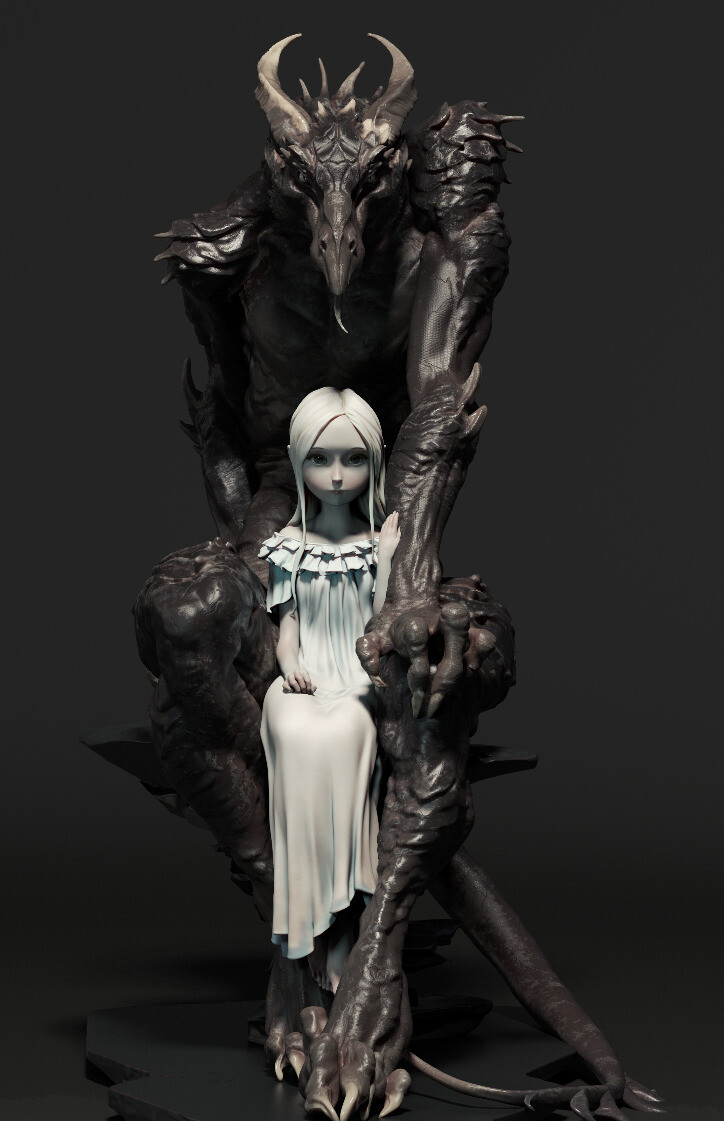
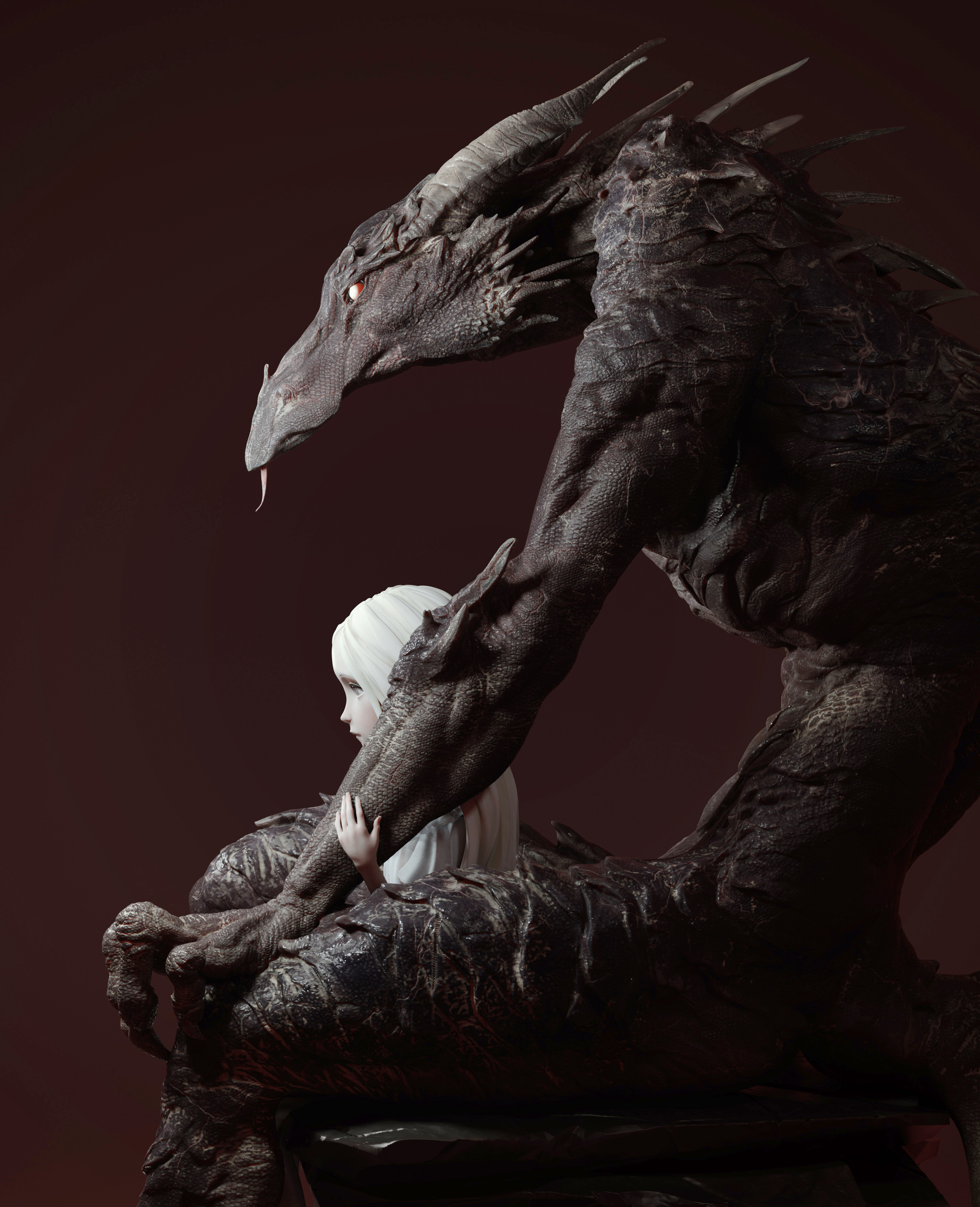
When I sat down with Maria Panfilova, we talked about her piece Kidnapped. A 3D project that began as a simple sketch and grew into something layered and haunting. What struck me is how Maria doesn’t treat 3D as just a technical process. For her, it’s closer to sculpture and painting. Composition, mood, and story sit at the center, and the tools are there to serve those things.
🎨 Starting with sketches
Maria doesn’t begin in 3D. She starts on paper, sketching out the key pose and composition. For *Kidnapped*, the triangular relationship between the girl and the monster was set from the very beginning. “I like to make sketches to search for the main composition. The triangular pose was important, it was the base of the story.”. That early clarity gave her a frame to build on. The entire sculpt grew out of that triangular shape, which created tension and balance at the same time.
Takeaway: Strong compositions are set early, they become the backbone of the whole project.
📖 Simple storytelling idea
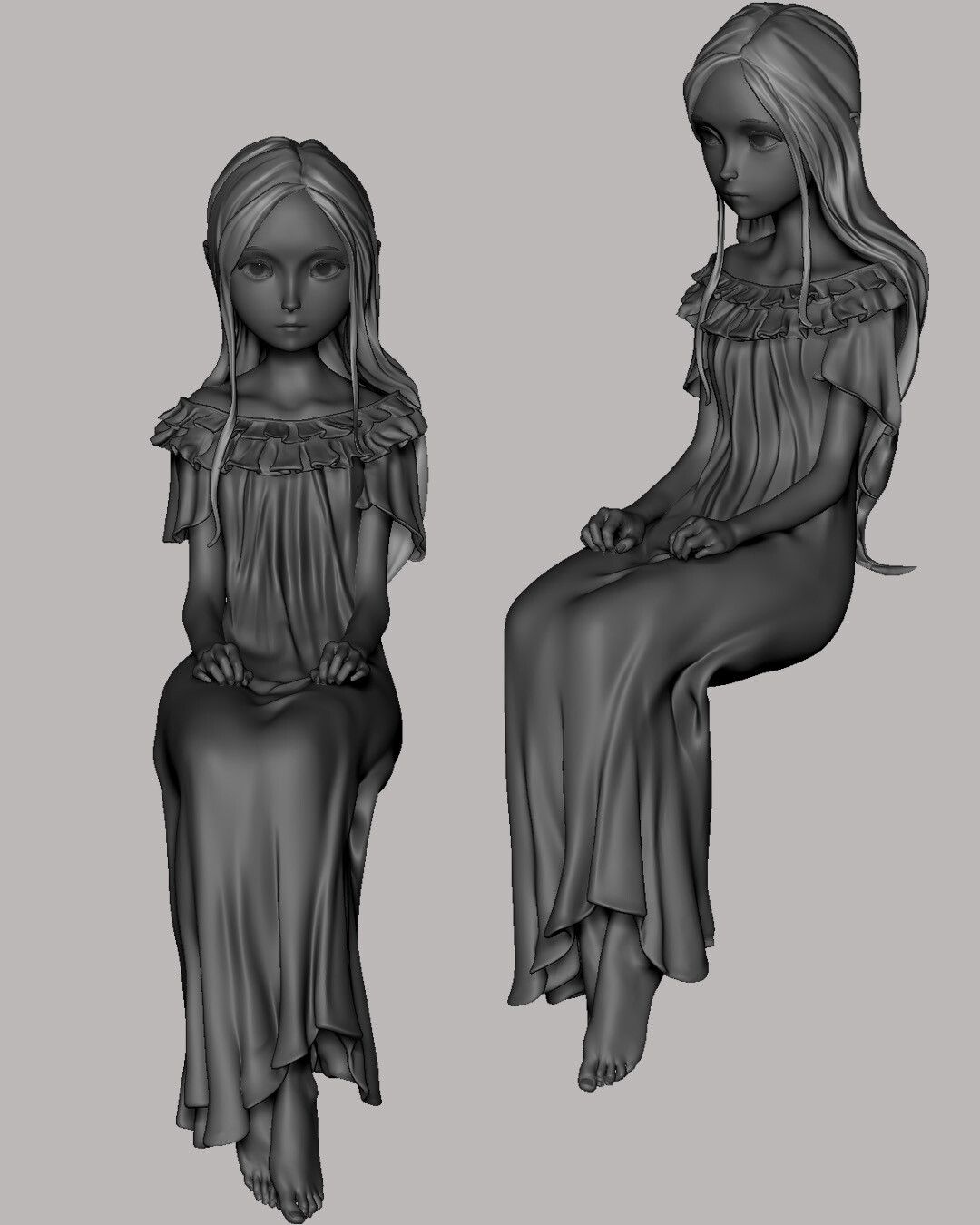
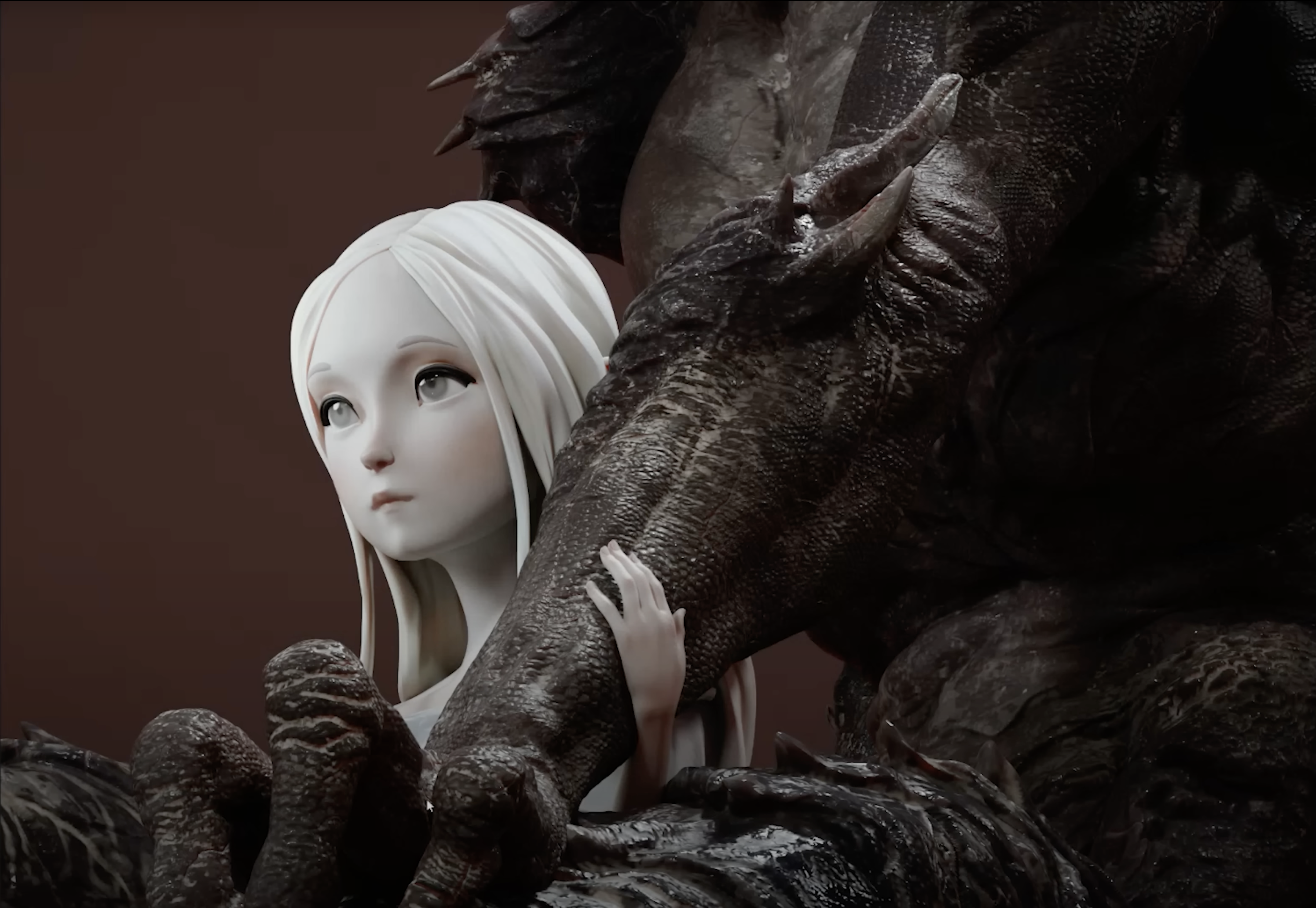
The narrative of *Kidnapped* is direct and effective: a delicate, porcelain-skinned girl pulled away by a dark captor. “The storytelling idea is obviously he kidnapped her… but she’s not wanting to go.” She deliberately kept it simple. Two characters, one interaction, one clear tension. Nothing extra was needed.
Takeaway: Simple stories can carry powerful visual impact.
⚡ Risky movements in sculpting
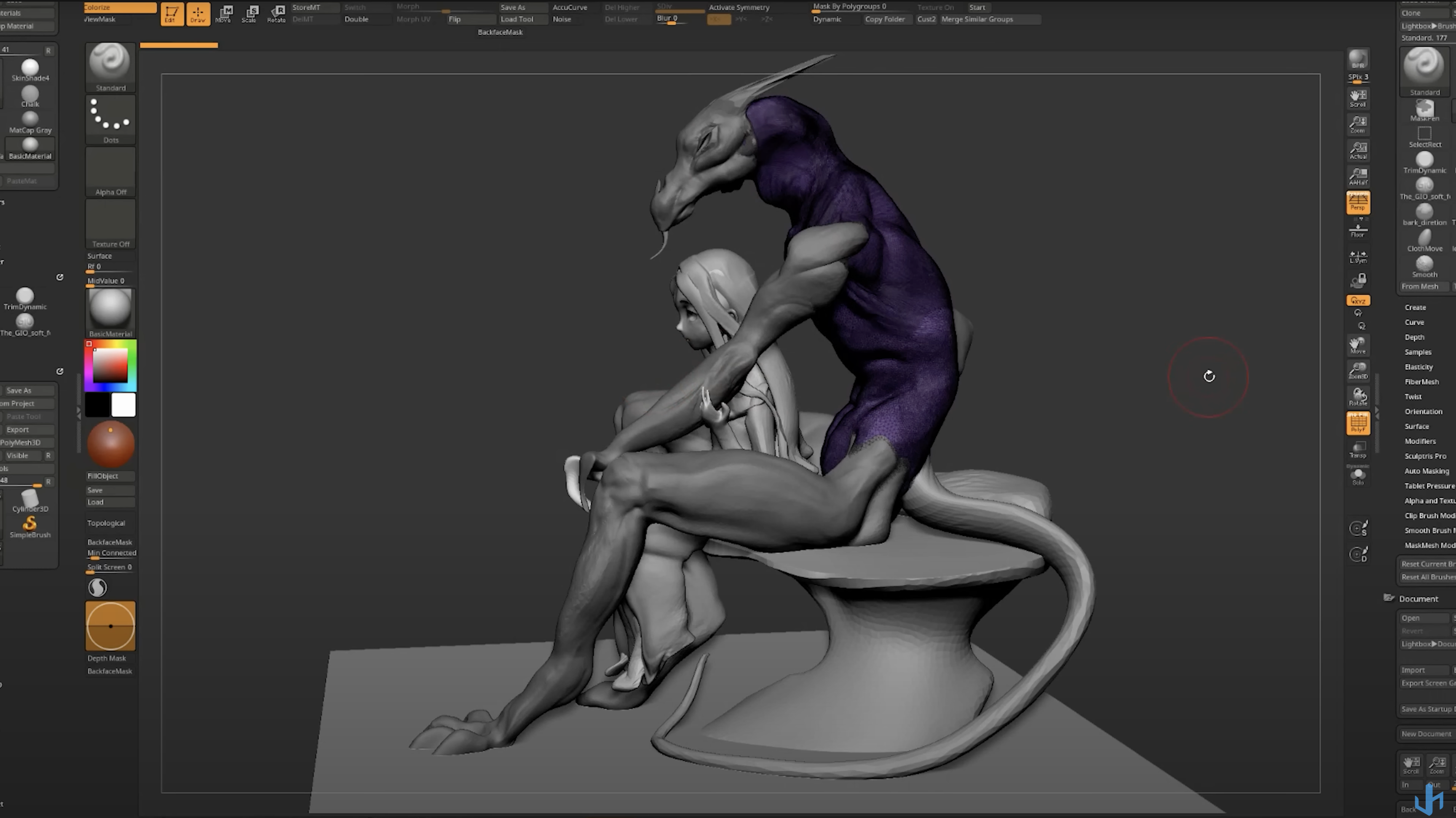
Maria explained that working from nothing gave her confidence to take big risks early on. “When you already have a detailed base, you’re careful, you don’t want to break it. But when it’s just spheres, you can move everything, push proportions, find the gesture.” It’s this stage where she captures the life of the character. Later, refinement and polish can be added, but the energy comes from those early, fearless moves.
Takeaway: Be bold at the beginning; gesture and energy matter more than detail.
💡 Lighting as the hardest challenge
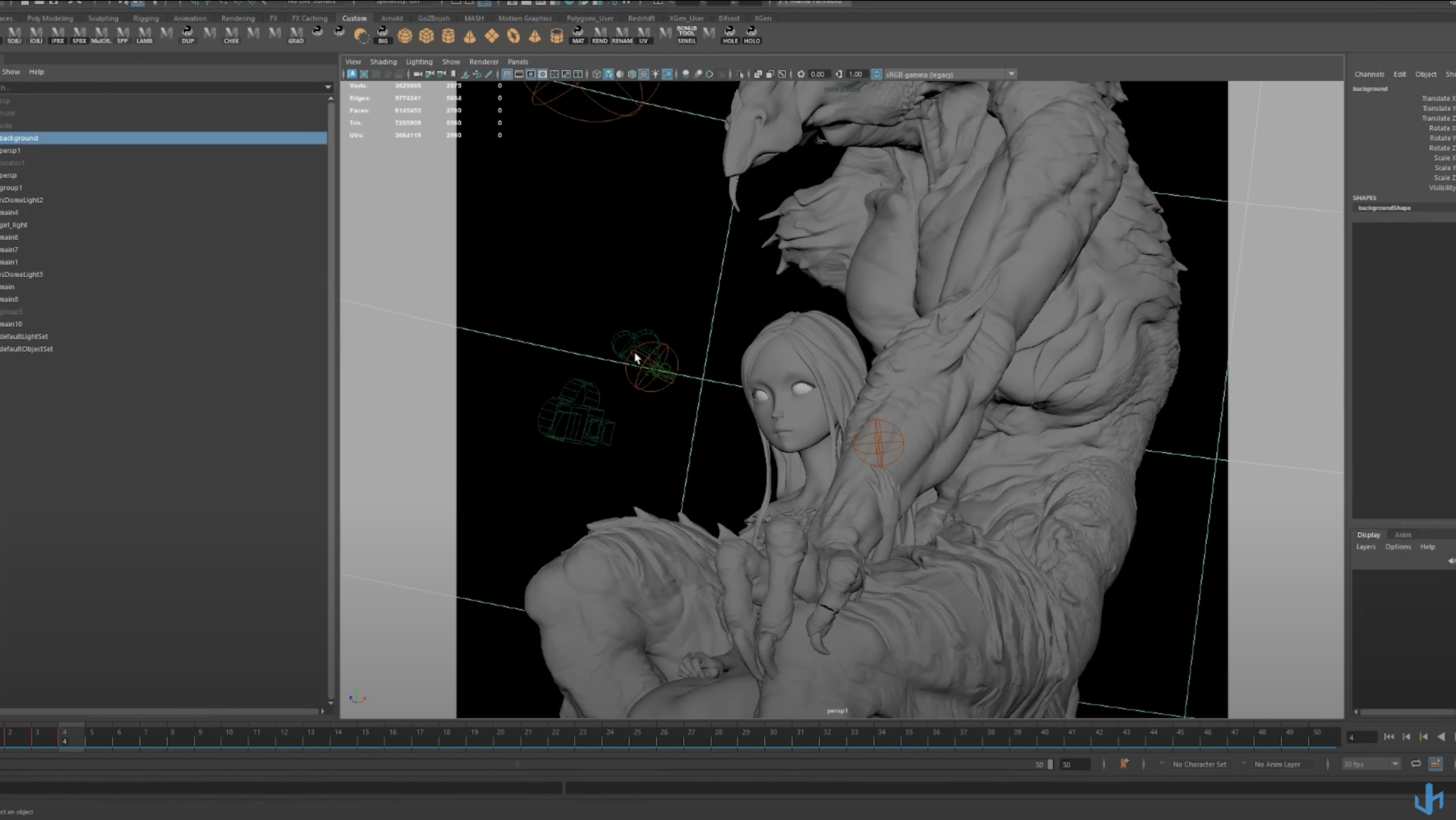
For *Kidnapped*, Maria said the sculpting wasn’t the real challenge; the lighting was. “You add more and more and I wanted to focus on her… but then you change it and you lose some initial freshness.” At one point, she felt she’d lost the original spark completely. The mood she wanted to capture had slipped away as she tweaked and added.
Takeaway: Lighting isn’t just technical, it defines the story and mood of the piece.
⏸️ Stepping away when stuck
When that spark was gone, Maria stopped working on the project for a while. Only after stepping away could she return and see it clearly again. “Sometimes you need to leave it. You can come back with fresh eyes, and you see what was wrong.” That break helped her rebuild the contrast and focus she wanted between the two characters.
Takeaway: Stepping away can be the most important part of finishing.
🖌️ Painterly texturing
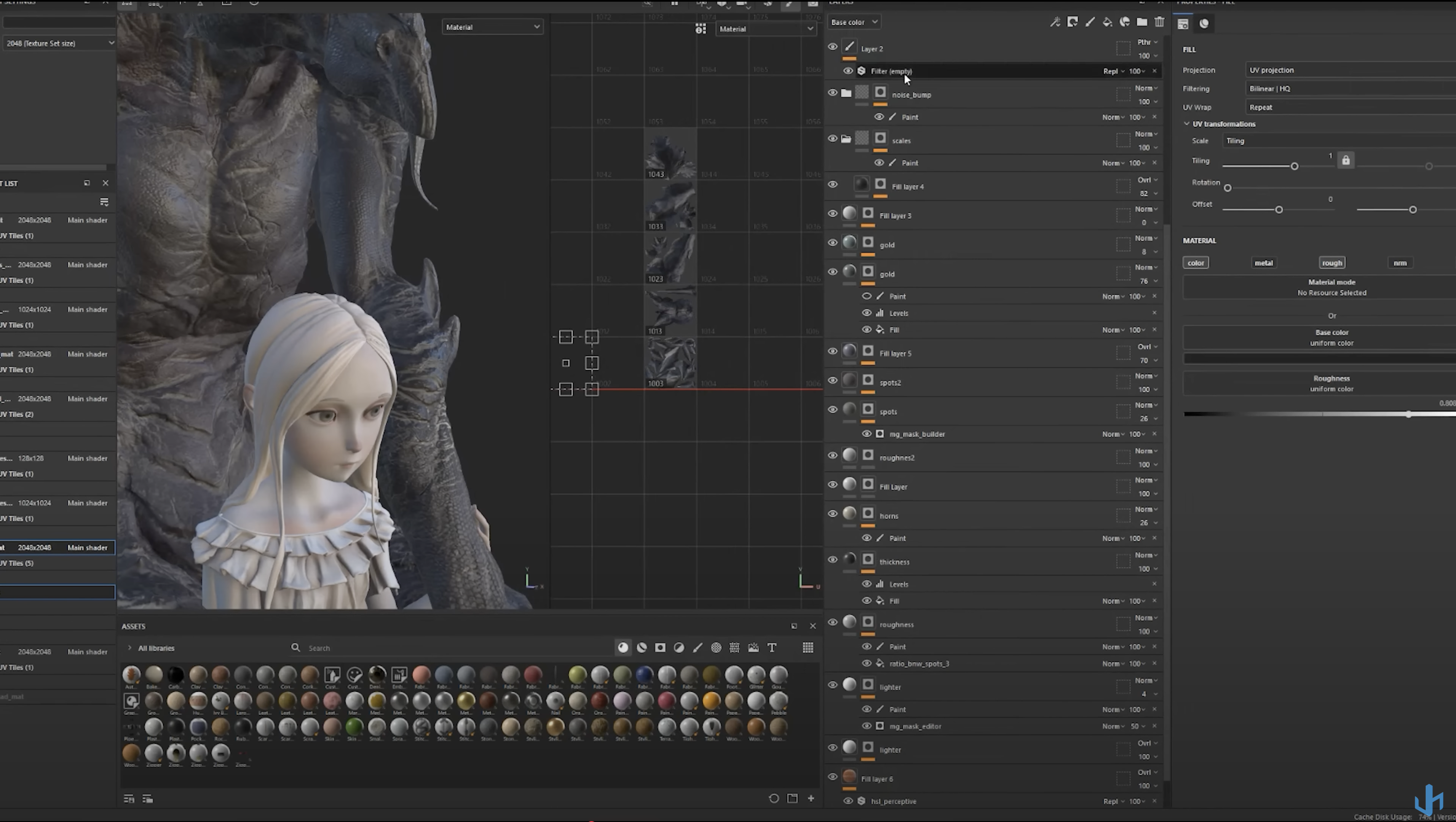
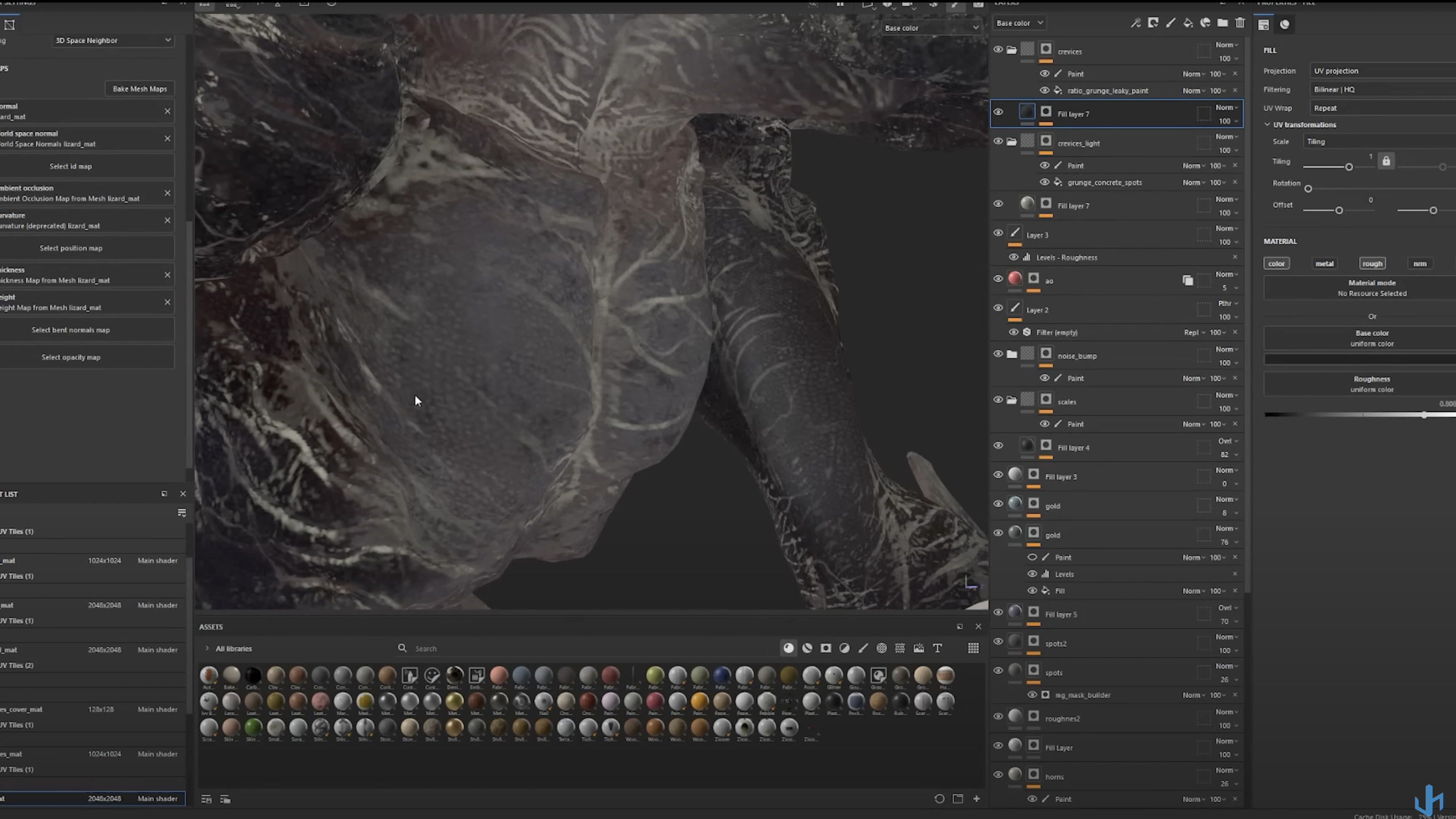
Maria’s textures are not about photoreal accuracy. Instead, she makes artistic choices, layering colors, pushing AO, using subtle variations and strokes that feel like brushwork. “I don’t like when textures look too realistic or too 3D. I like to make them a bit painterly, a bit abstract.” It’s this approach that makes her work stand out and avoids what she calls the “generic 3D look.”
Takeaway: Textures can be expressive choices, not just surface detail.
🤔 Ambiguity as a strength
Maria enjoys when viewers can’t immediately place her work in a box. “I like when people may be tricked, thinking maybe it’s a drawing, maybe it’s a photo, but not a real photo.” That ambiguity keeps people engaged. It forces them to look longer, to think about what they’re seeing.
Takeaway: Ambiguity adds intrigue. Don’t always give the viewer an easy answer.
🚀 Personal projects as practice
Maria has been freelancing for nine years, and throughout that time her personal projects have shaped her career. “My personal work wasn’t really the intention to get clients. It was just to play and see what happens. But over time, new kinds of clients started to come.” By making personal art without commercial pressure, she built skills and found opportunities she hadn’t expected.
Takeaway: Personal projects aren’t just practice, they can shift your career in surprising ways.
✅ Finishing over perfection
Maria doesn’t believe in sitting forever on one piece. “If you sit too much on one work, you delay the next one. Growth happens when you use that knowledge on the next piece.” For her, finishing is the real teacher. Each completed project is a step to the next.
Takeaway: Progress comes from finishing and moving forward, not chasing perfection.
💼 Nine years of freelancing
Over nearly a decade of freelance work, Maria’s balance has been steady: client projects on one side, personal work on the other. Each one feeds into the other.
Takeaway: Long-term growth comes from sustaining both professional and personal practice.
🔍 Discovery through making
Every personal project teaches her something new, whether it’s anatomy, posing, storytelling, or technical process. “Each time you make something new, you find something you didn’t know before. That’s the point of it.” It’s a cycle of curiosity, exploration, and discovery.
Takeaway: Curiosity keeps your work evolving. Each project is a chance to learn.
Bottom line:
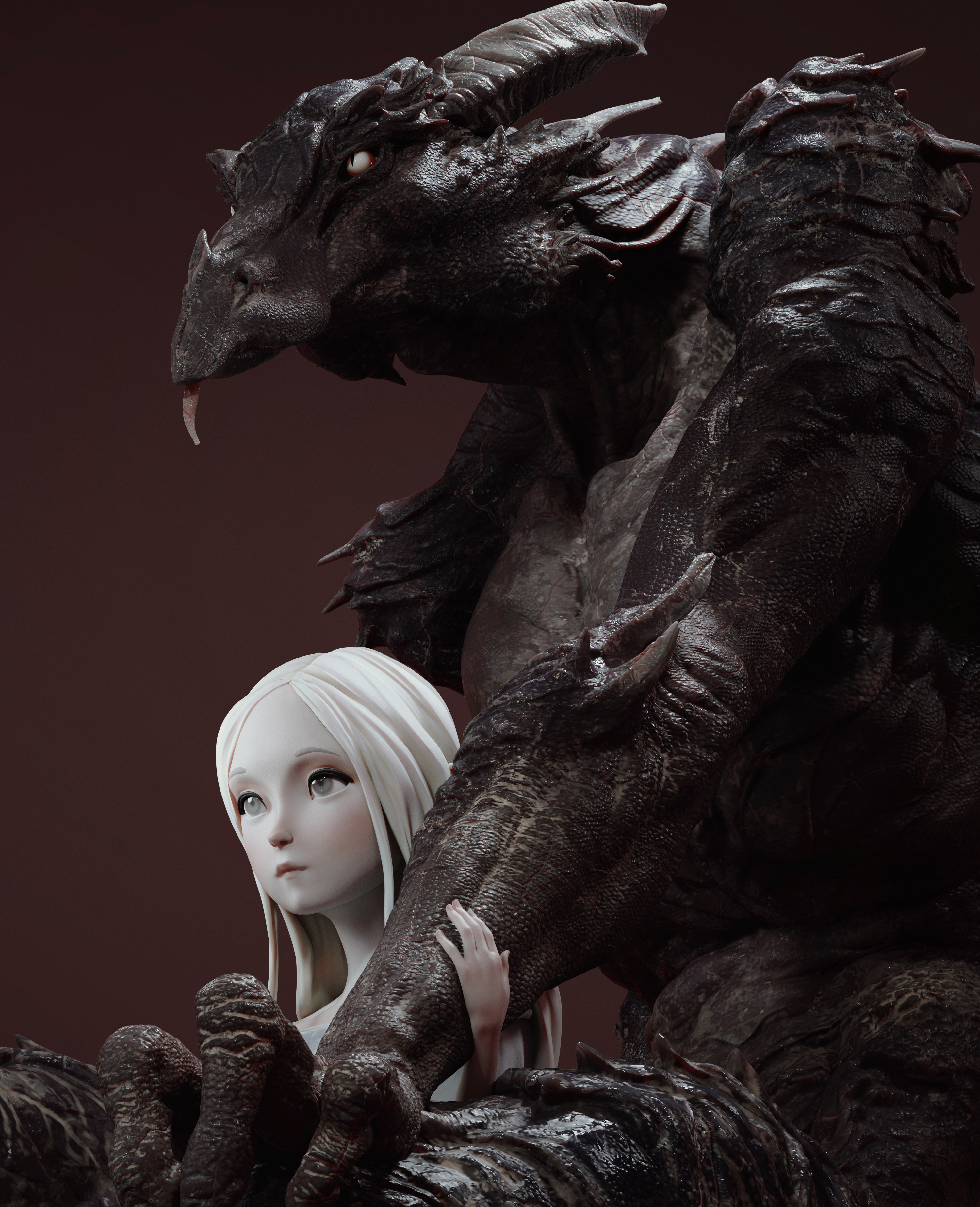
Maria Panfilova’s *Kidnapped* is proof that 3D can be fine art. Shaped by sketching, composition, bold sculpting, painterly textures, and storytelling. Her journey also shows the deeper truth: it’s through personal projects, finishing and moving on, that real growth happens.
 |